


Gendered Sport Environments and Women’s Injury Risk
A Scoping Review
The Issue
Injury rate disparities between women and men have been recognized for decades. Risk factors for injury are commonly attributed to athlete characteristics without considering external gendered forces. To date, we don’t have a clear picture of the state of the scientific evidence regarding the gendered features of the sport environment that may be contributing to increased injury risk for women.

Why this matters?
Injury prevention efforts are most effective when broader societal and cultural norms are targeted, rather than placing the burden on individual people to change their behaviour. Providing a wider lens to the causes of ACL injury can offer opportunities to intervene in sports injury.

Project Aims
This scoping review aimed to summarize the existing literature that describes the gendered aspects of women’s sports environments.
Specifically, we explored:
The existing literature relate gendered aspects of the sports environment specifically to injury risk, experiences, or outcomes; and
If the gendered sports environments described in the literature align with the four environments depicted in our Gendered Environmental Approach to sports injury.
Study Methods
Search
Academic journal articles appearing in one of our selected electronic databases

Data Collection
Title and abstract screening, followed by full-text screening for study eligibility

Data Extraction
Relevant information from eligible articles saved in an Excel extraction table

Data Synthesis
Sandelowski’s (2000) thematic survey approach

Findings at a Glance

Ingrained stereotypes in sport devalue women and normalize women athletes as occupying a position secondary to me

Sports environments can both reproduce restrictive behavioural and bodily gender norms for women
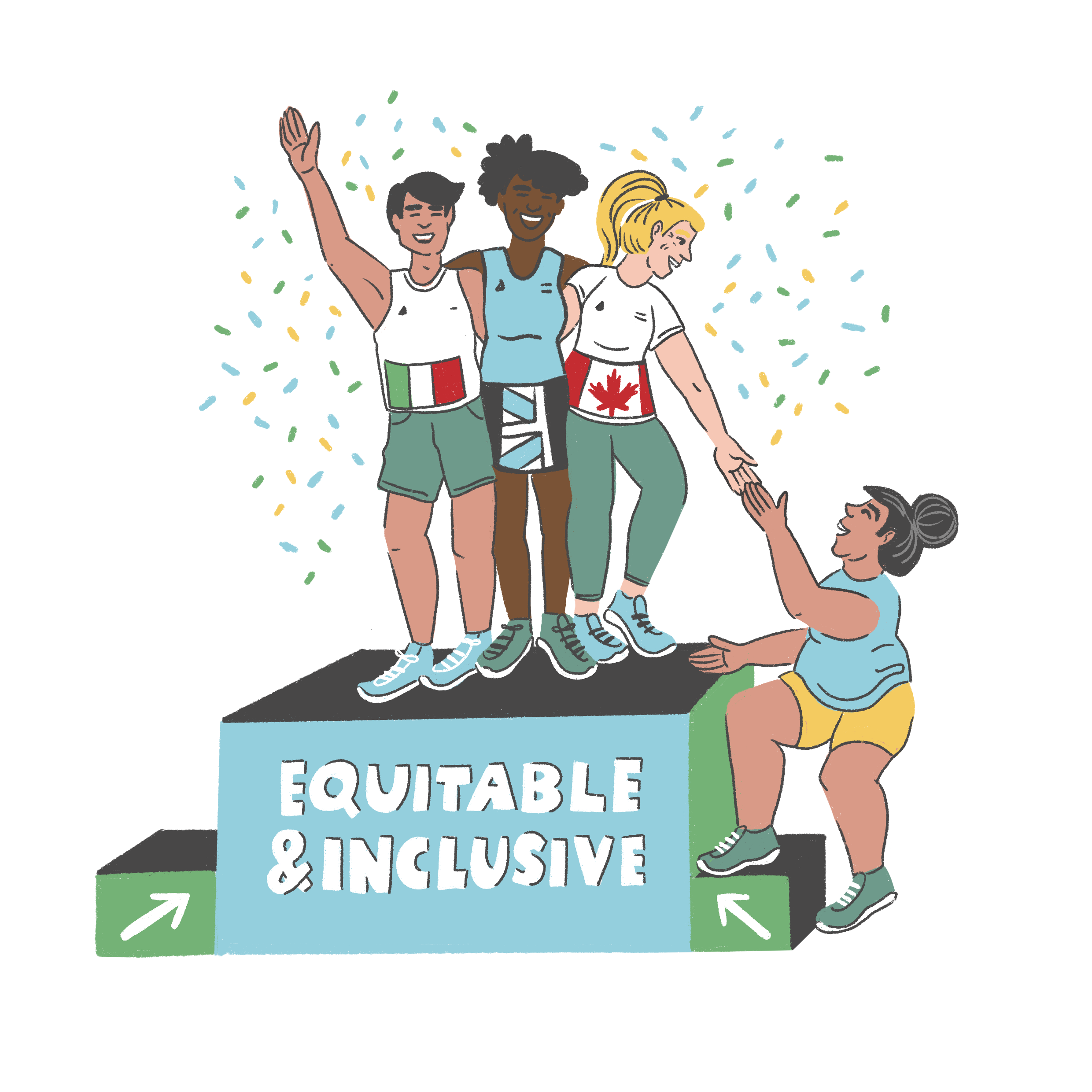
Gendered inequities, including gendered wage inequality and provision of subpar training facilities, were structurally embedded in women’s sport environments

What We’ve Learned
-
Parsons, J. L., Akinrolie, O., Loewen, H., & Coen, S. E. (2025). Gendered sport environments and their theoretical contributions to women’s injury risk, experiences, and outcomes: a scoping review. Women in Sport and Physical Activity Journal, 33(1). https://doi.org/10.1123/wspaj.2025-0019
Thank you to our funders & collaborators for supporting the project:


Olayinka Akinrolie
Research Assistant

Dr. Joanne Parsons
Research Team
Co-Principal Investigator

Dr. Stephanie Coen
Co-Principal Investigator
Funders & Collaborators
Hal Loewen
Co-Investigator