

by Rebecca Jackson
After spending most of the first year of my PhD in the office, preparing my theoretical framework and research design, I was excited to close off the summer semester with two conferences: Breaking Barriers, organised by the Richmond Gender in Sport Research Centre, and the International Medical Geography Symposium (IMGS).
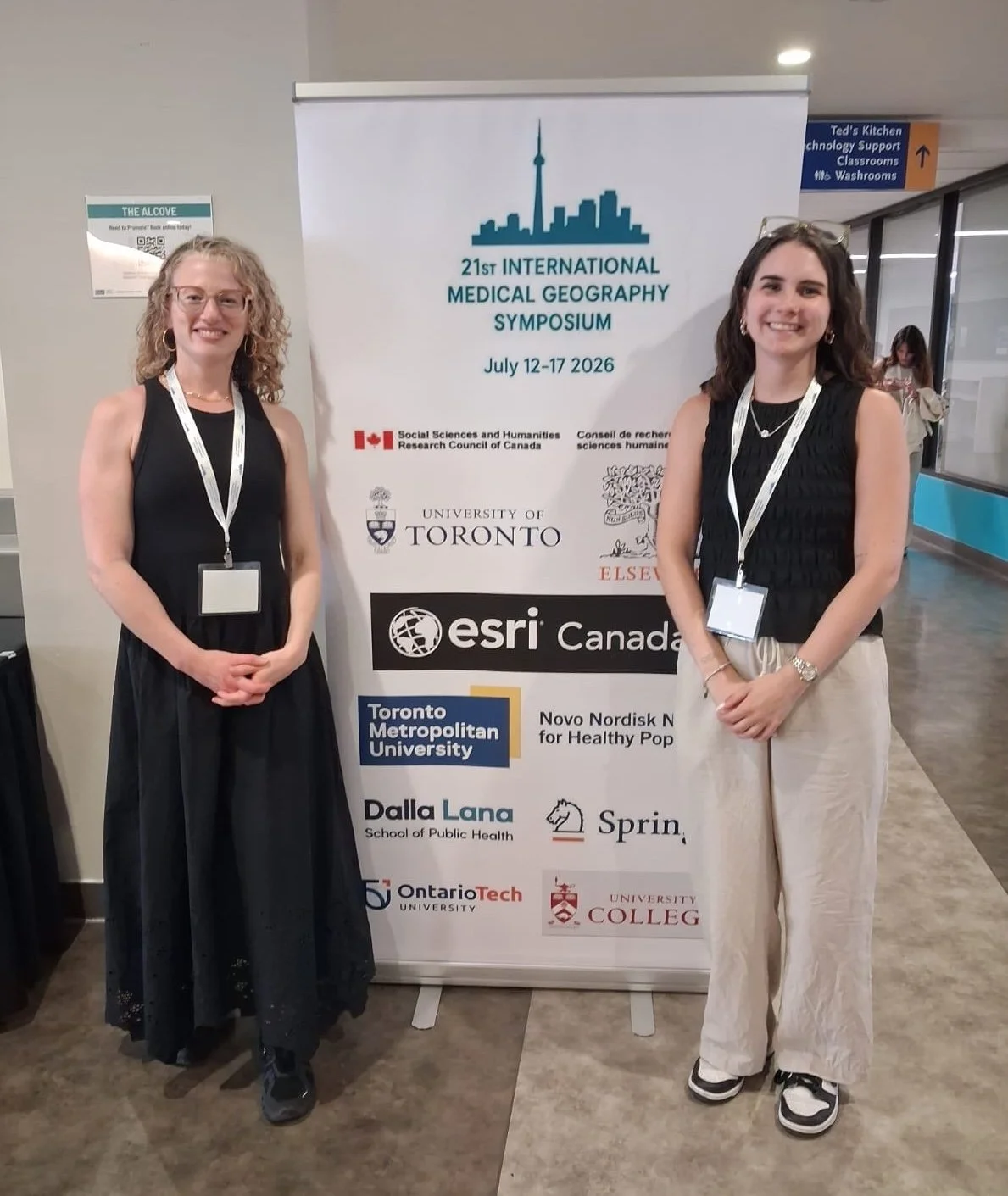
At face value, the conferences differ greatly. Breaking Barriers, located 2 hours away in Leeds, UK, was centred on the issue of equity and inclusion in sport, whereas the IMGS, hosted in Toronto, Canada, was focused on health geography. However, both conferences were united by the passion of their presenters and their desire to create broader social change through research. From the Breaking Barriers ‘In Conversation’ session with ocean rower Miriam Payne, who was part of the first women’s team to row the Pacific non-stop and unsupported, to the numerous IMGS panel sessions which reflected on the future and potential of health geographies, I was inspired by the range of speakers I listened to.
Critically, both conferences helped me to reflect on my own research and to discover new theoretical and methodological perspectives. While my PhD research focuses on the experiences of players in English girls’ grassroots football, Breaking Barriers gave me the opportunity to hear about work which explores issues of equity in sport from alternative standpoints. From coaching perspectives to media representations, sport management, and even pedagogical reflections on teaching about sport, Breaking Barriers emphasised the importance of attending to the range of interconnected systems and structures which produce inequitable sporting environments.
My reflections from the IMGS built on this idea well, as the work I saw illustrated the broader social value of challenging the inequities we see in health. Best encapsulated to me by Rodrigo Curty Pereira’s proposal for a Political Ecology of Wellbeing, his work emphasised how adapting our physical environment can do more than improve physical health outcomes. By understanding wellbeing as something which also encapsulates dimensions of life such as sense of dignity and opportunities for social inclusion, helping marginalised groups enter and stay in sport may serve to challenge more than just health inequities. As a result of these important debates and discussions, I left these conferences feeling reinvigorated and ready to contribute to these fields with my own work.
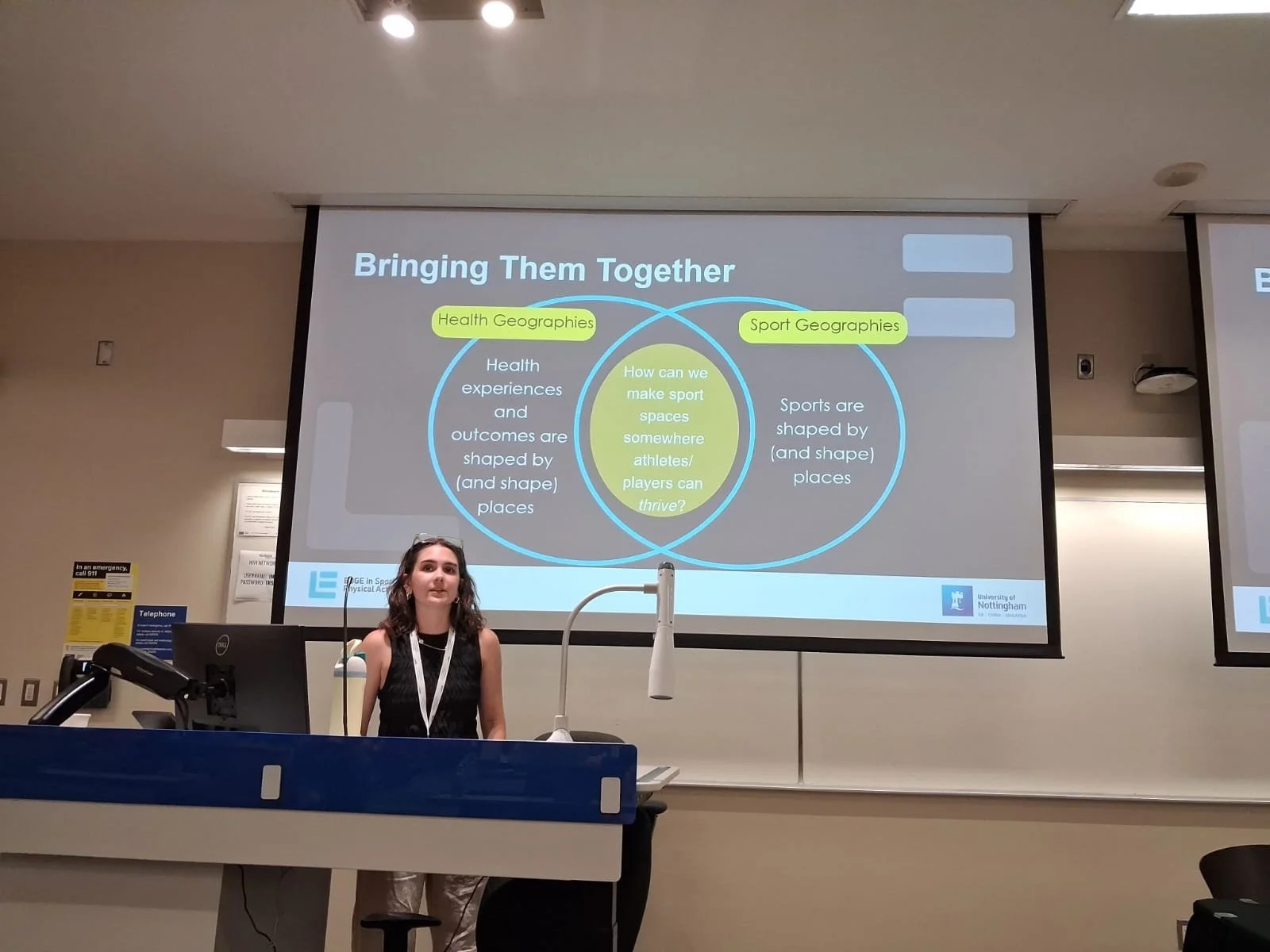
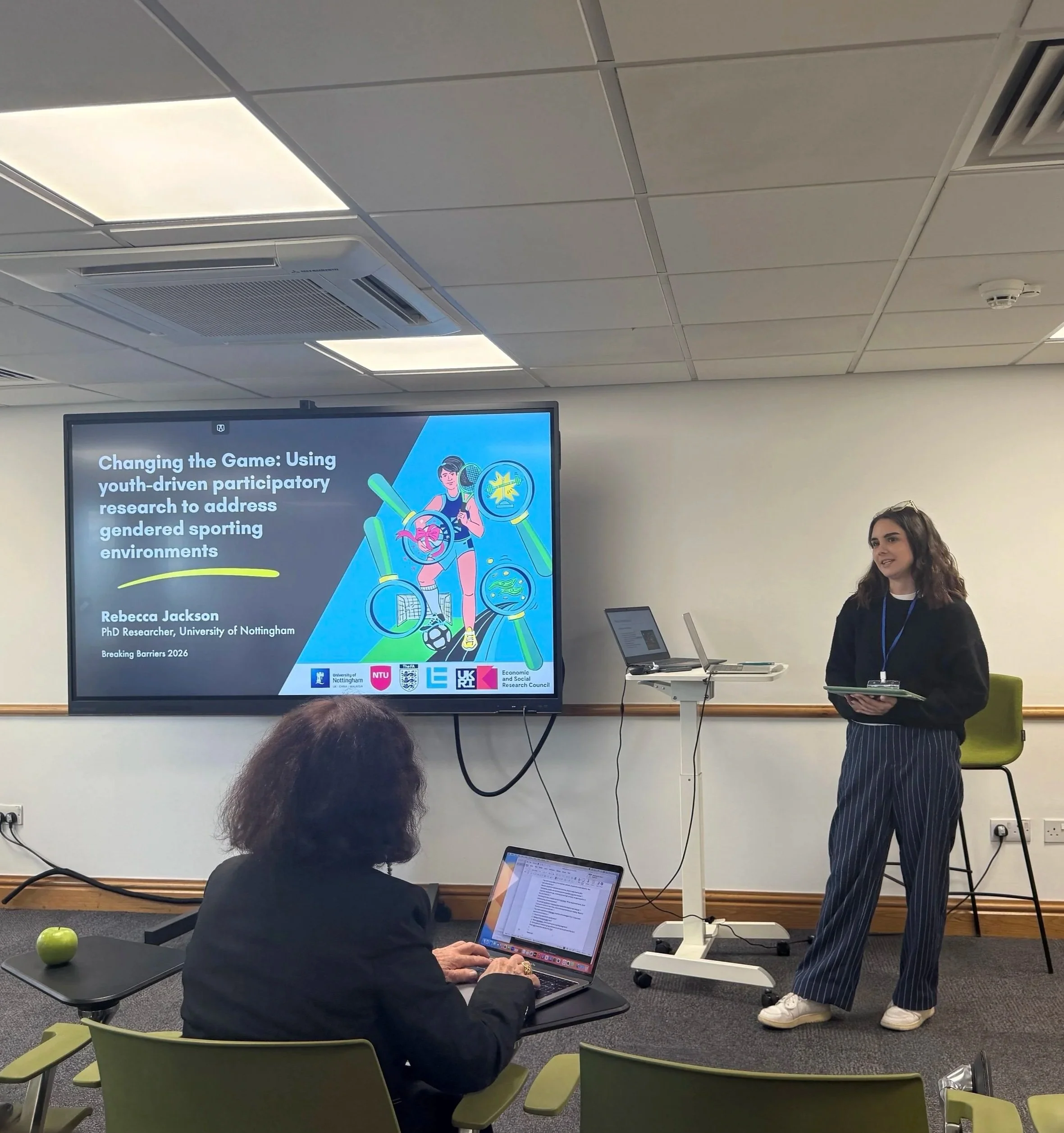
I was already able to start making these contributions, as in addition to attending, I was grateful for the opportunity to present and lead sessions at these conferences. At both Breaking Barriers and the IMGS, I presented my theoretical framework; I discussed the need for critical geographies of health and sport, and how the Gendered Environmental Approach can be applied to address inequitable sport spaces and health outcomes. At the IMGS, I worked with Justine Pineault from the Université de Sherbrooke to lead the special session ‘By Youth, With Youth, or For Youth? Creative Participatory Methods in Health Geography’. Here, we were lucky to hear about the work of our five amazing presenters, exploring various ways in which their research centres youth voices through creative, participatory approaches.
Initially, the prospect of attending one conference alone and one on a different continent as a first-time conference attendee and early career researcher had left me feeling extremely nervous. However, this summer showed me the amazing opportunity for community that comes from academic conferences. Although working in academia can often feel quite isolating, my time at Breaking Barriers and the IMGS reminded me that there will always be people who share your research interests and are interested in your work – you sometimes just need to see them.
Becca’s research is funded by an ESRC Collaborative DTP PhD Studentship [grant number ES/Y001877/1] in partnership with The Football Association. Her participation in the IMGS was supported by her ESRC Studentship funding.